Hawaiian Film
A couple of weeks ago I went to Kauai and took with me my parents’ old film camera (a Nikon N80). There, I shot one roll of black and white film (Ilford HP5 Plus 400) mostly over the course of two days in Waimea Canyon and Ha’ena State Park. This was my first time doing film photography of any kind.
Photography
I have some qualms regarding photography generally. A few years ago I wrote an essay largely about photography and its faults in response to reading Every Fire You Tend by Sema Kaygusuz (a great book) and some works by Susan Sontag. I’ll copy a few sentences of that essay here:
In photographing a subject, a photographer does not truly accept the subject for what it is. Rather, the photographer imposes a framing, an unnatural composition – the photographer adds lighting, the photographer poses and rearranges their world: they create the photo that they want, not the one that exists for the taking. The act of looking through the viewfinder takes you out of the real world and places you in this other, perceived world. That photography is so widespread gives people a sense that the world can be understood as an anthology of images. Certainly, photographs have their place in aiding understanding of the world, but I do think that they are relied on a bit too much. Sontag said, “the camera’s rendering of reality must always hide more than it discloses.”
In another sense, photography misrepresents reality by taking what should be a transient moment and making it last forever. The ability to grant immortality – typically a divine power – is placed in a machine, available to anyone to use at a moment’s notice. In Kaygusuz’s novel, taking a photograph of a dancing man is described as “gentle murder”, “fatal assault.” The dance, taking place at a cultural celebration meant to connect with the people physically there at that time, is taken out of context and made available for people not ever intended to see it years after the dance is done. The spirit of the dance is gone. And think, when you notice someone is taking a picture, do you not act a little differently? does the moment not irreparably change? Photography fatally transforms the moment.
I find a certain allure to film photography over digital photography. Digital technologies, broadly, have been designed in order to reduce the work and time it takes to do something – it is easier to text or email than write a letter and send it in the mail, to open Spotify and press play than to get and play CDs or vinyl, to open the camera app and press a single button than to carry a large physical camera and manually adjust it for every shot. On paper, a noble effort. But in practice, there is something lost. People might get caught up in optimizing their life and forget that the process is just as if not more important than the product. It’s casual sex against a committed relationship.
I spend probably an above average amount of time with computers and digital technology (that is the field in which I work, and its rare for me – as I’m sure it is for you – to not have a 3"x6"x0.5" metal/glass box in my right pocket). Finding escape from this makes analog media attractive. With film photography, you are more mindfully present in the act of taking a photo. The natural limit on quantity encourages more thought behind every photo (does not the mere knowledge that your time on earth is limited make each day heavier?). There is a whole process to process your photos and there is inherently a long time between when you take the photo and when you see the result. That there is a ritual and a certain intentionality to film photography makes it feel truer. When things are too easy to do, they are taken for granted, so adding for yourself some difficulty to the photographic process, might encourage you not to take the ability to photograph for granted, to remember that it is an important, consequential action.
I probably have built this up a bit too much in my head. I think that in the end, what I want to get at is that I hope having experience with the more involved method of film photography might encourage better photo habits, even when I use easier, digital cameras.
That all said, here are some photos I took:
Waimea Canyon
Waimea Canyon is appropriately likened to the Grand Canyon. It is a canyon, and it is grand. It is an unexpected sight/site on a small island. The canyon tunnels wind, and standing at the edge was almost frightening. I had climbed on top of a small boulder to take a photo and quickly wanted to get down. The sunglasses that I had rested on my cap had blown off. Powerful stuff. Just a few feet from the edge, the wind already died down.
At the end of the road along the canyon is a lookout onto the Kalalau Valley, which historically was used as a place that different coastal indigenous villages would gather and trade their goods with one another, arriving by boat from all along the coast.
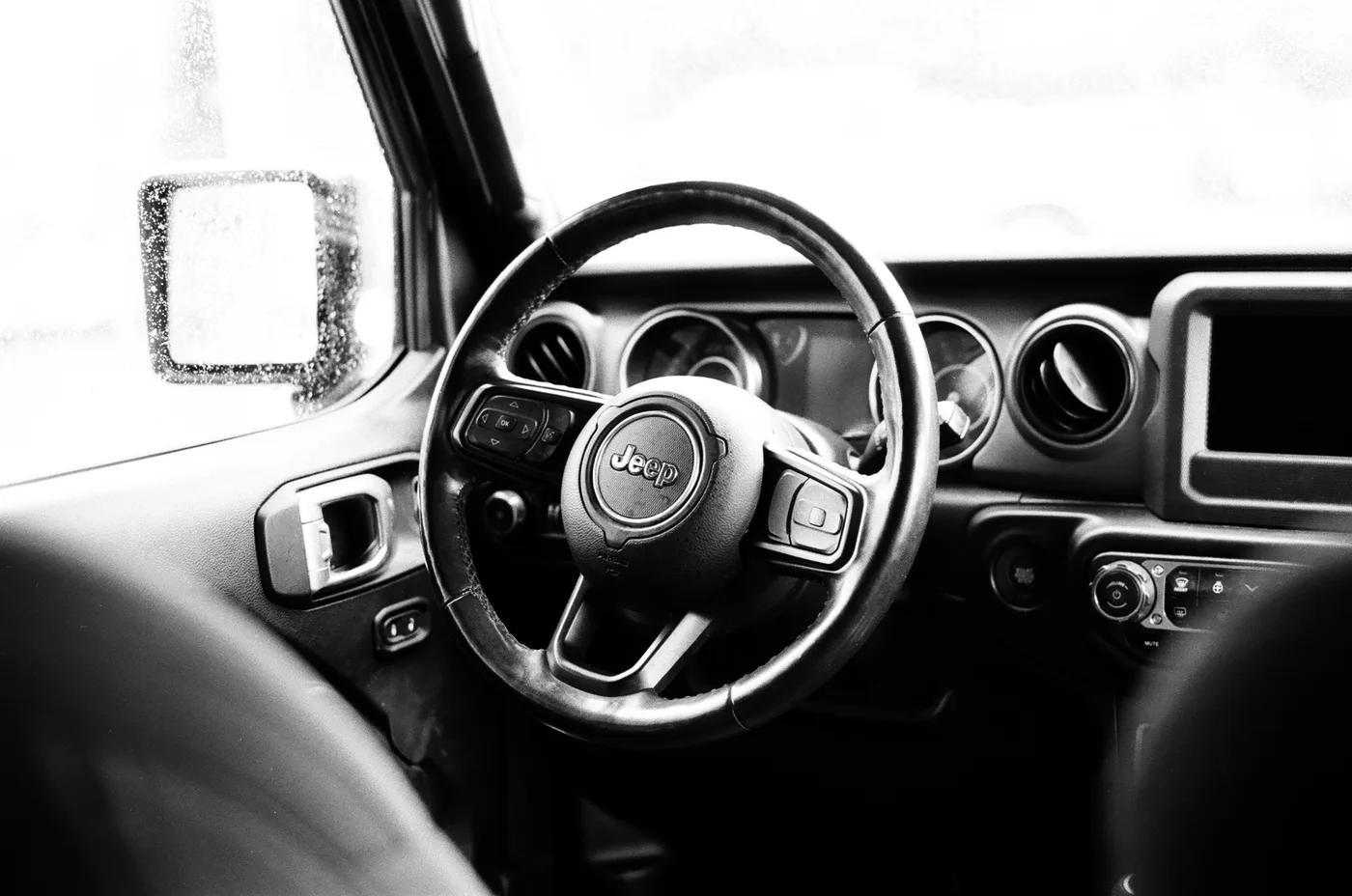
The Jeep
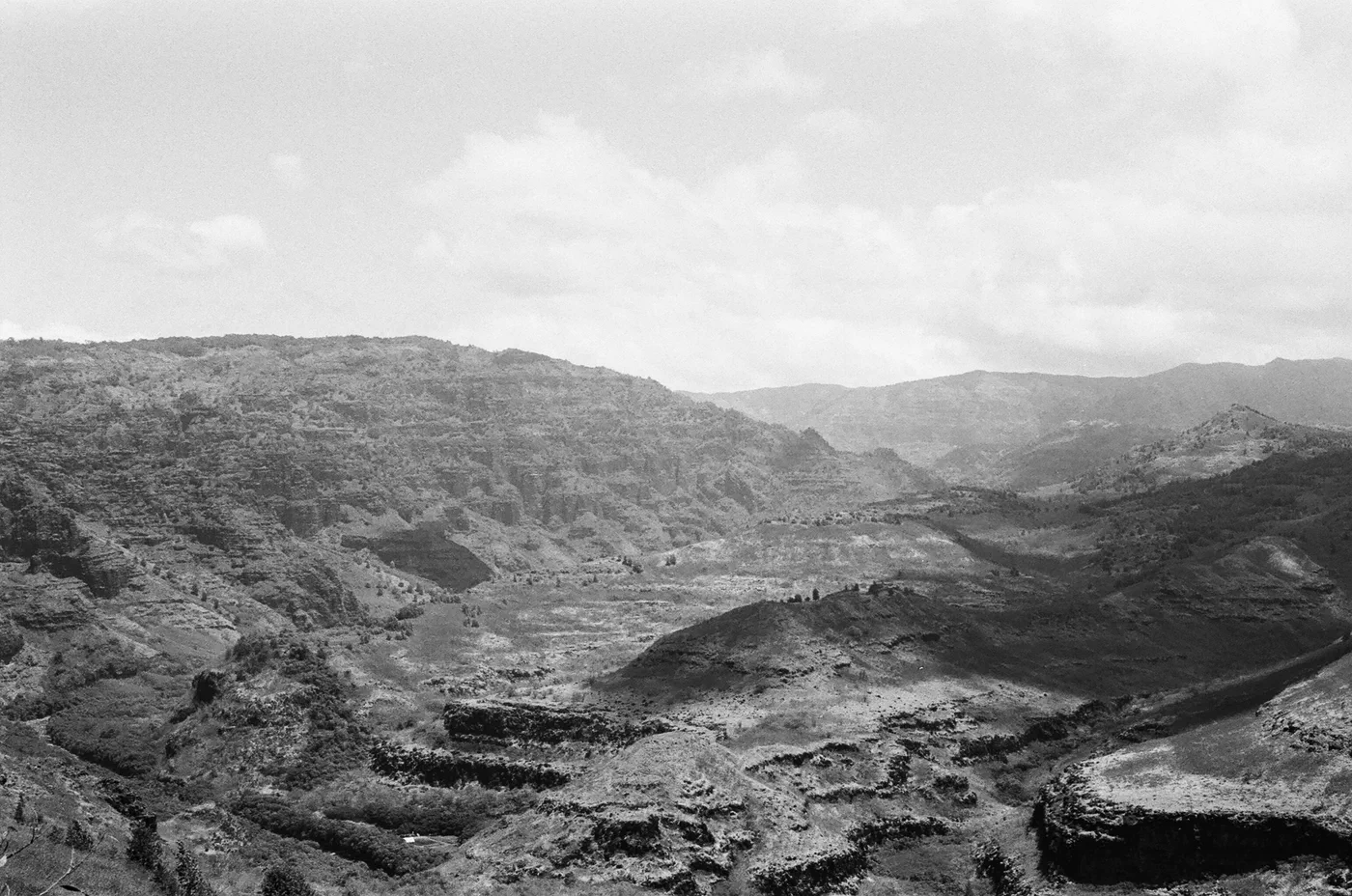
Waimea Canyon
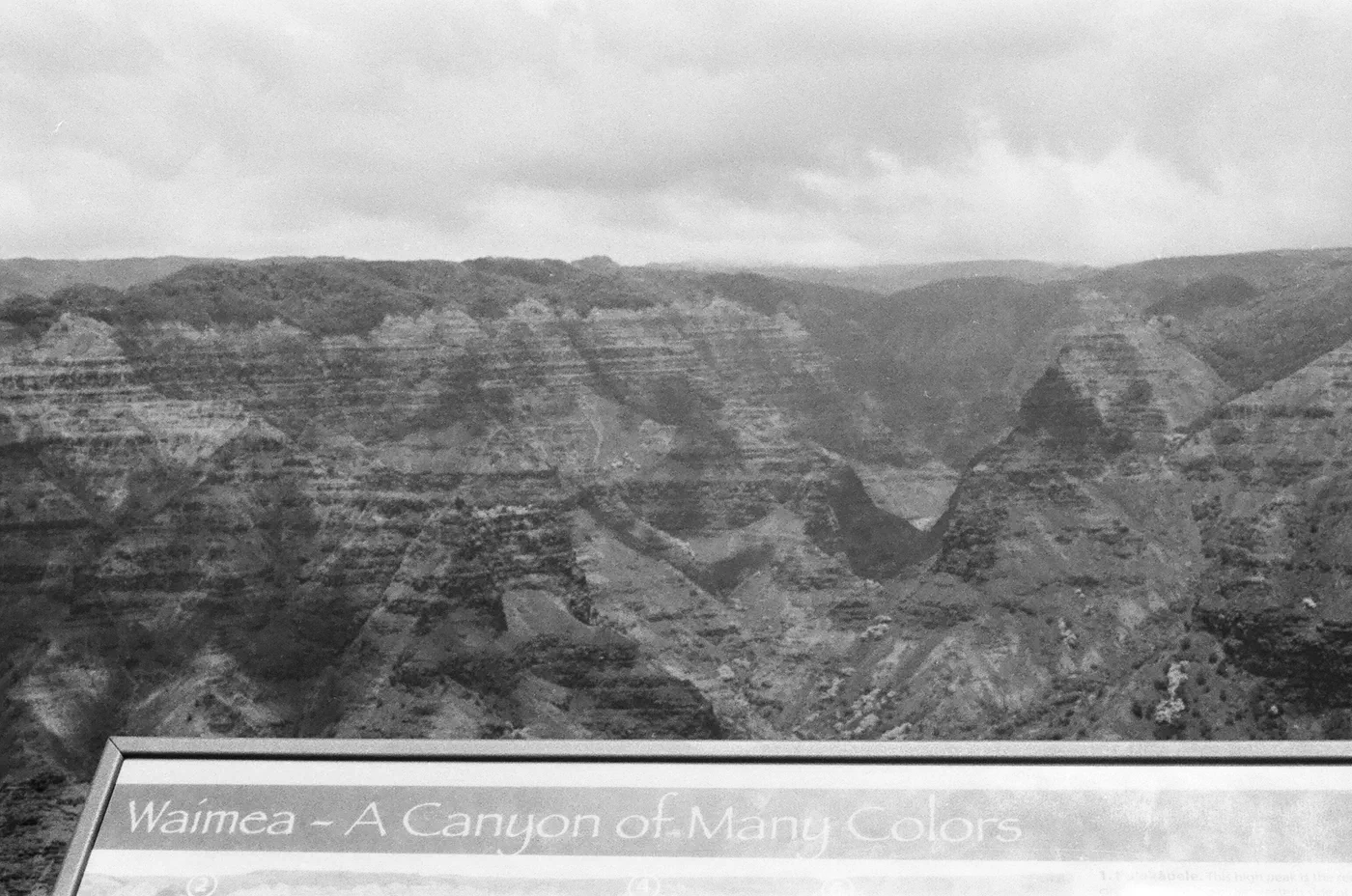
An ironic sign for my BW film
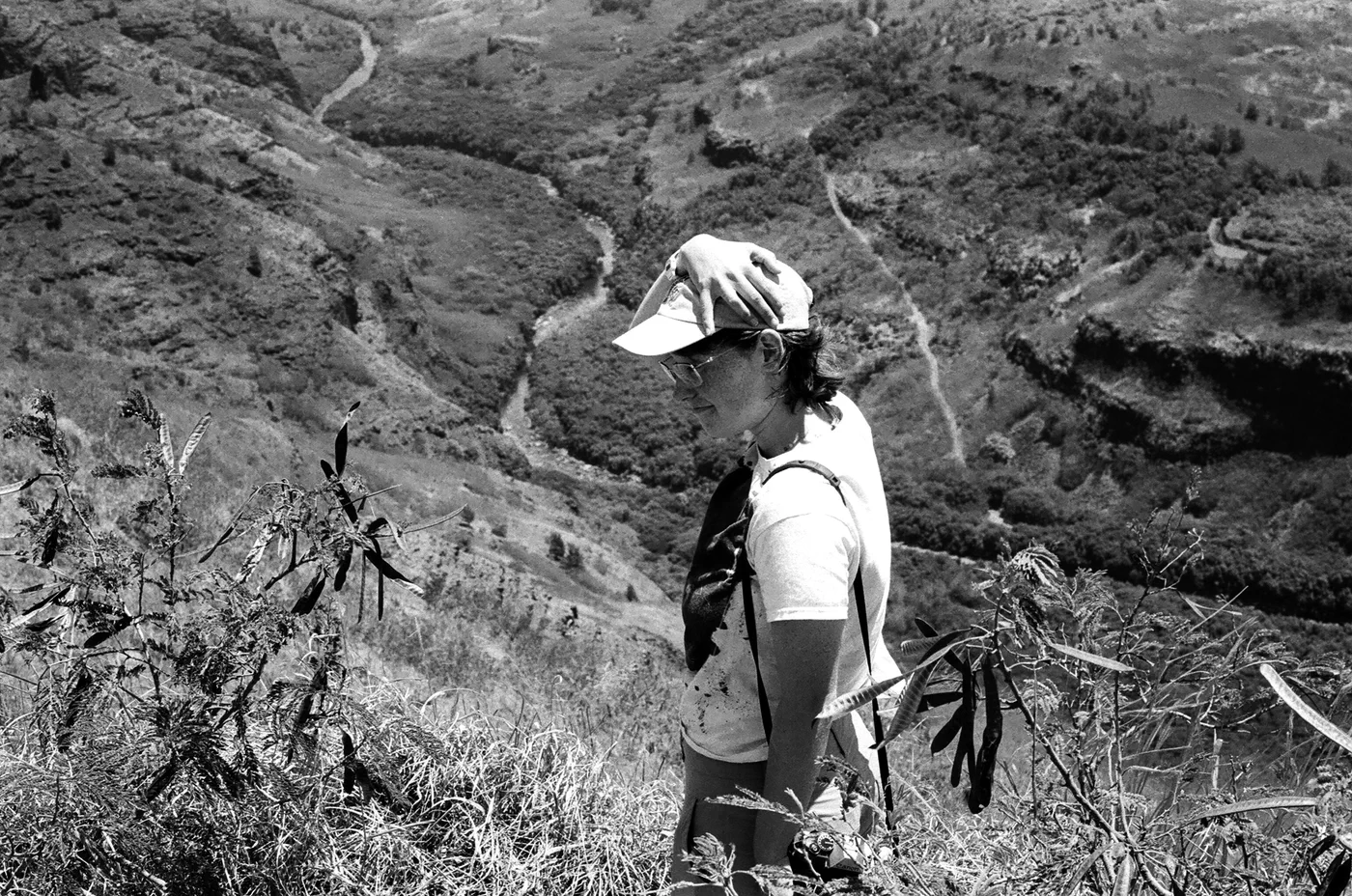
A’lia protecting their hat from the powerful wind
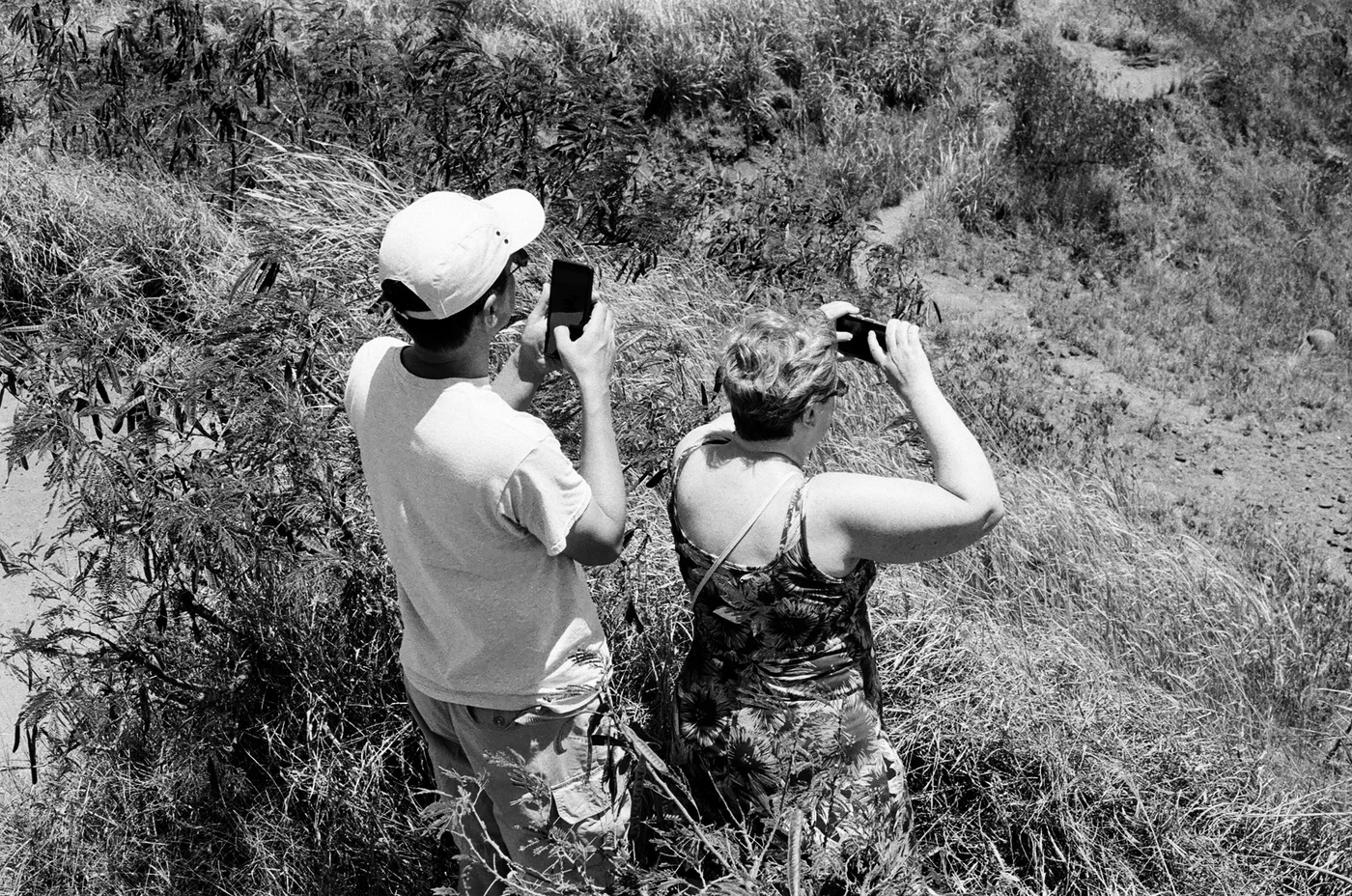
A pair of photographers (my parents)
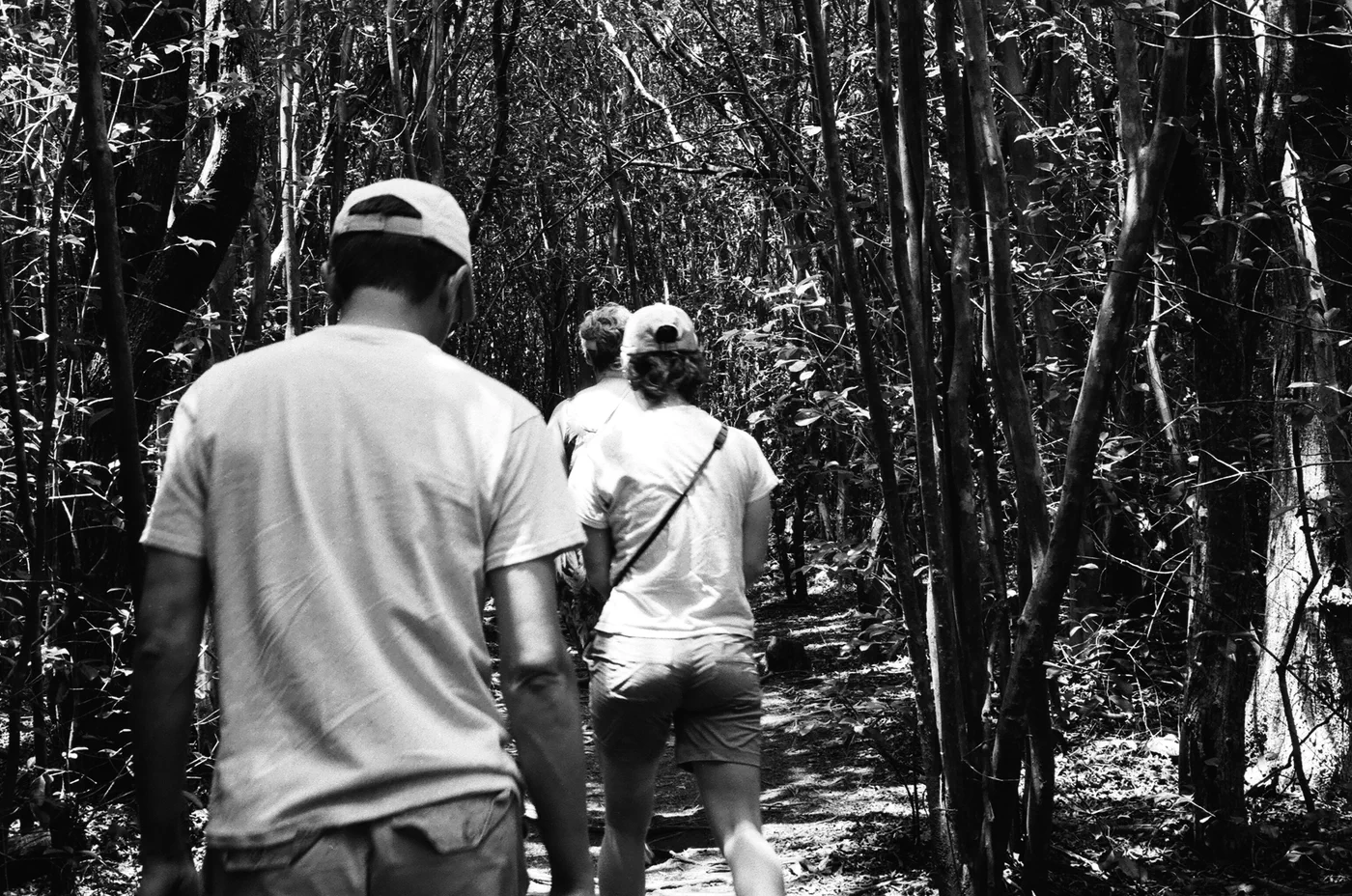
Entering ‘Forest’ by Franz Kline, or Pollock or somebody
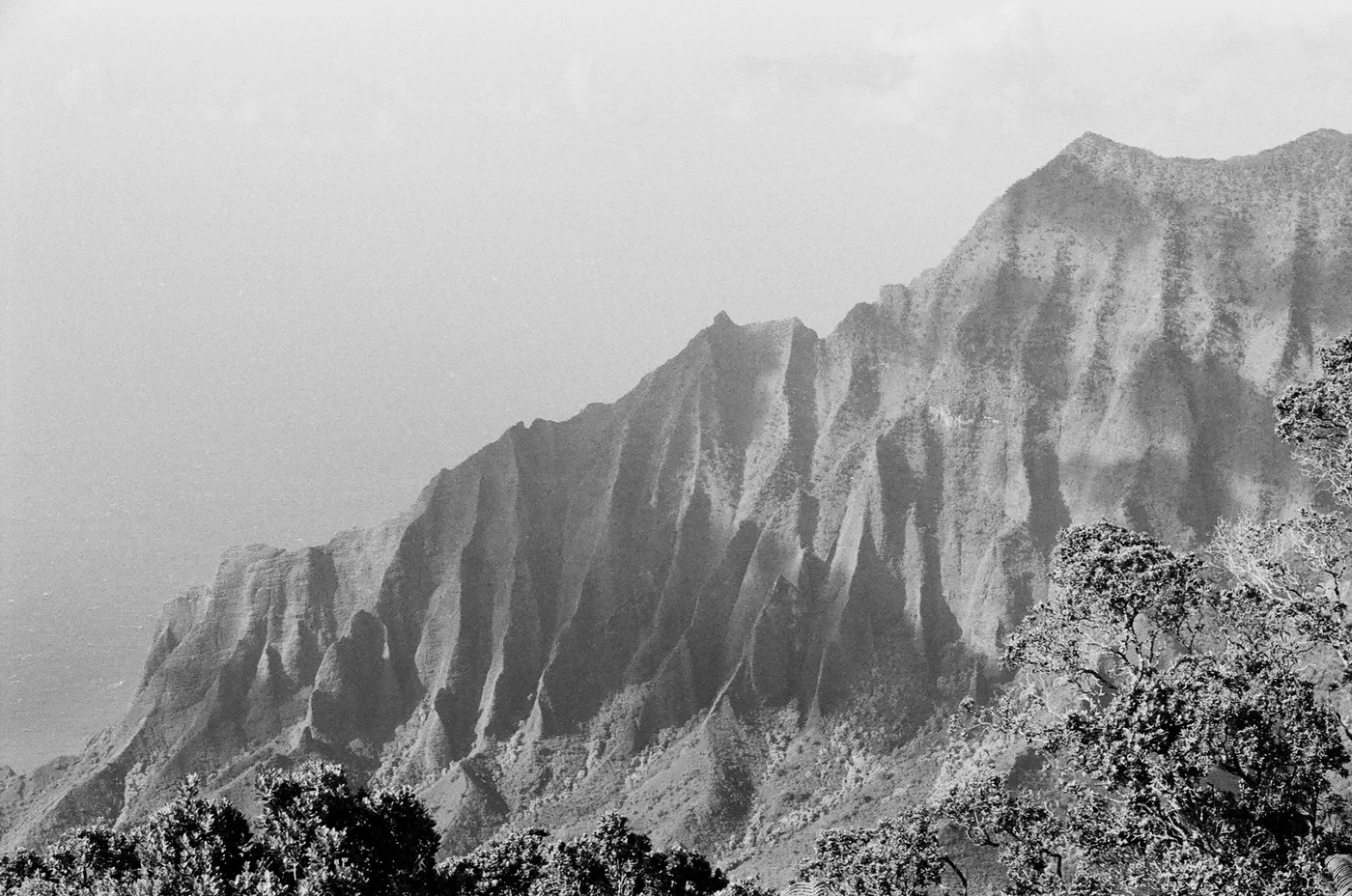
Kalalau Valley from Waimea Canyon Lookout
1 / 7
Ha’ena State Park
Supplement your reading of this section with an audio recording of a walk in this park.
Ha’ena State Park is a gorgeous park along the northern coast of Kauai, very reminiscent of California’s Big Sur, probably because its a cliff/steep slope near water. My assertion might be a bit of a ‘getting a lot of Boss Baby vibes from this’ situation, but there was even some pine looking trees growing along the trail so I don’t think my statement is unfounded.
The park mostly consists of a hike along the hilly coastline to Hanakapi’ai beach, where a freshwater stream empties into the ocean, and an unmaintained trail to a large waterfall along this stream. I wish I took some photos of the waterfall (and I did with my phone), but my camera unexpecedly ran out of film before I got to the waterfall. My 36 frame film only lasted for 31 shots unfortunately – I probably messed up loading it. There is also a further trail that leads to Kalalau Valley, but you need a camping permit in order to go down this trail and we were only day hiking.
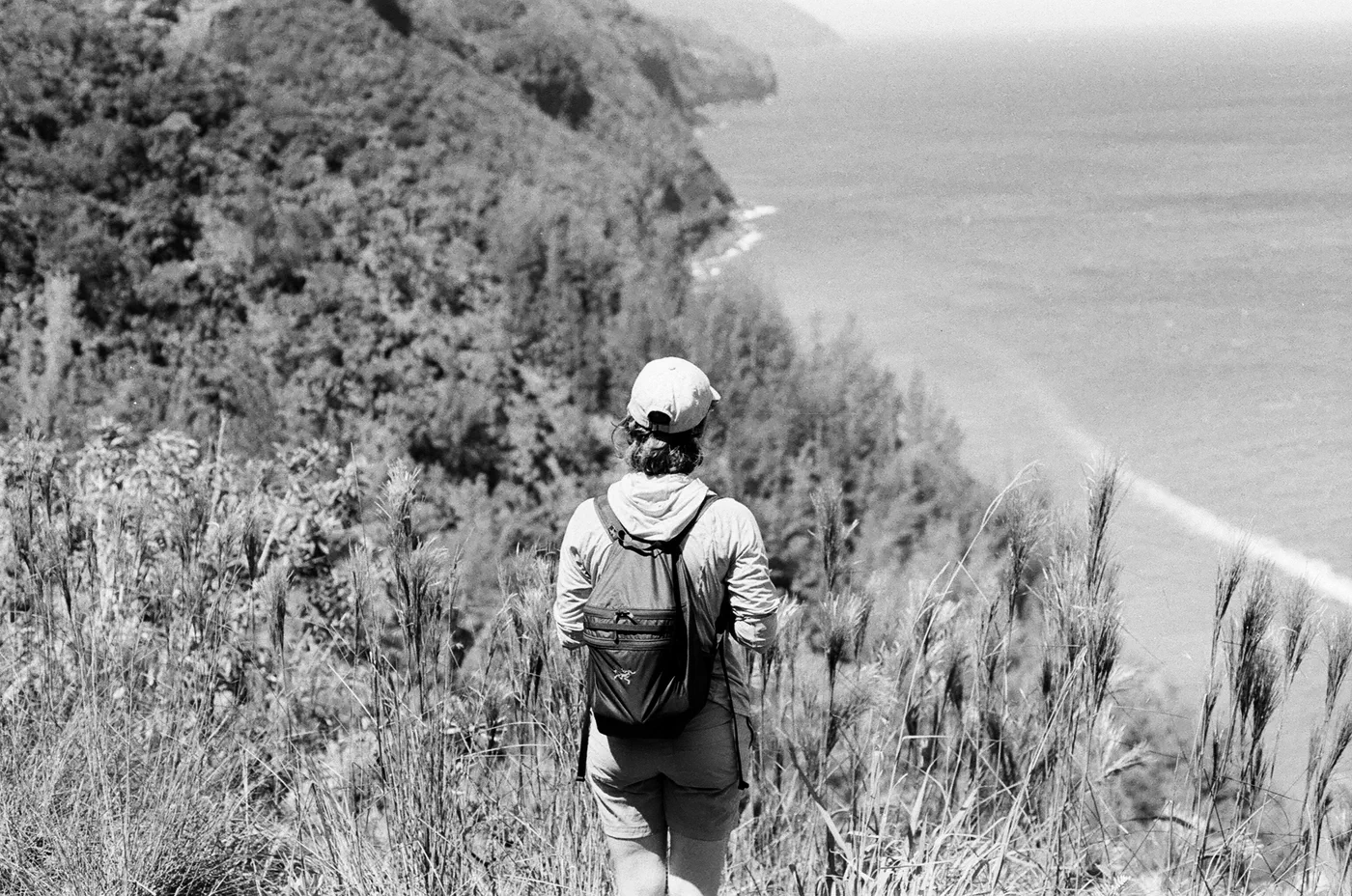
A’lia in front of Ha’ena coastline
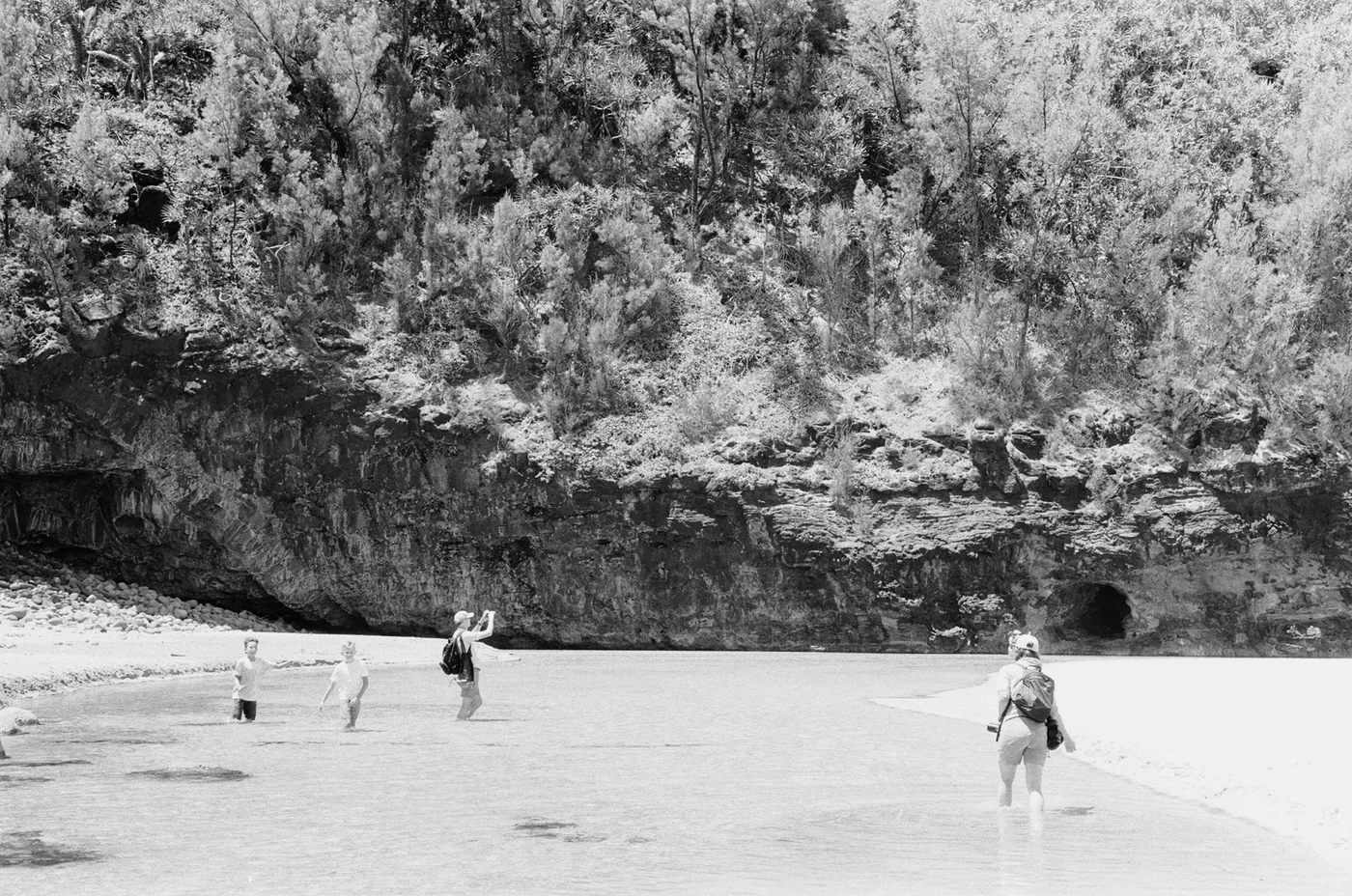
Hanakapi’ai beach
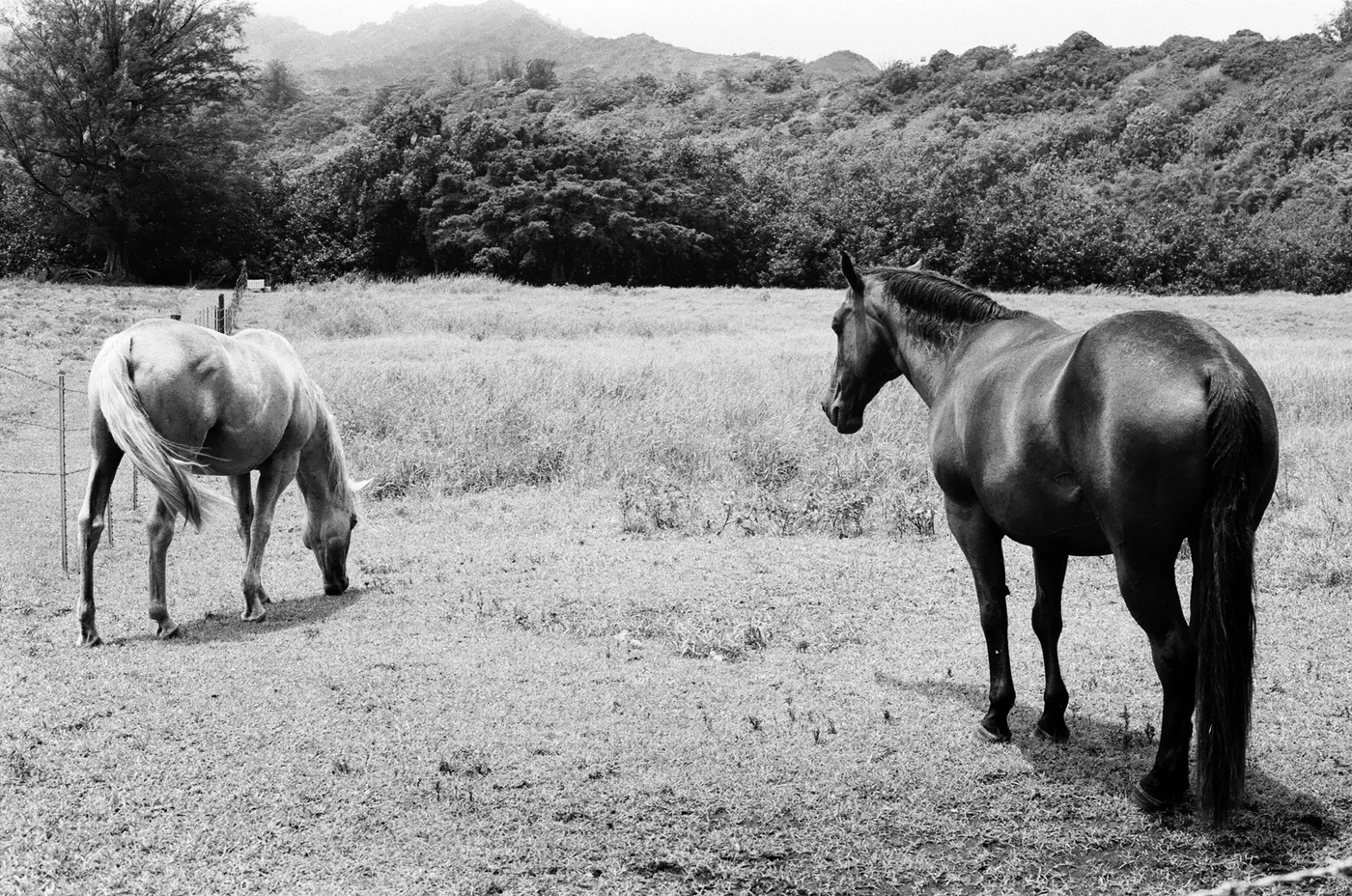
Horses outside of the park
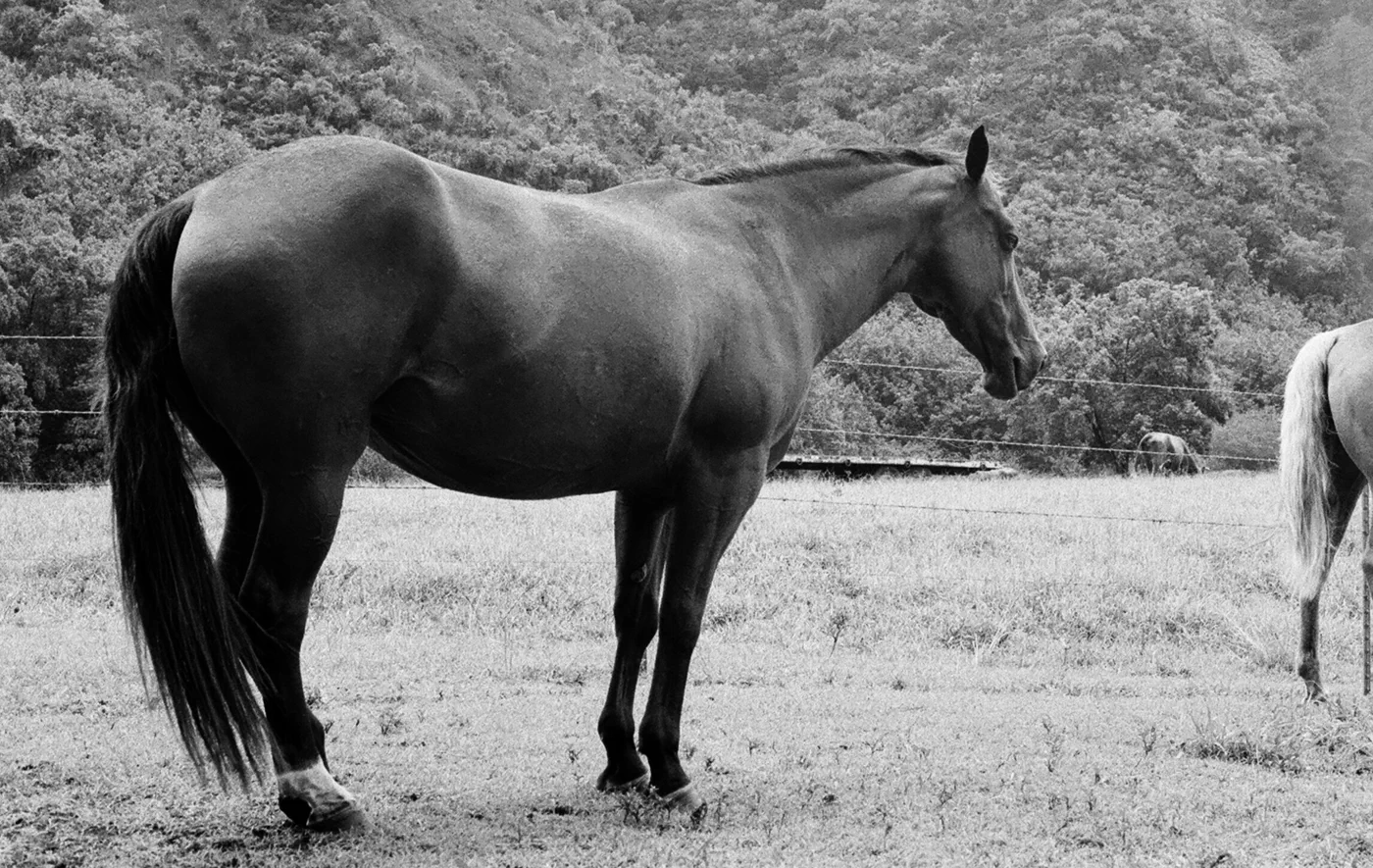
Horses outside of the park
1 / 4